

09 Oct Best Exercises for Physical Fitness at Home
In today’s fast-paced world, staying fit and active has become more important than ever. However, not everyone has the time or budget to hit the gym every day. The good news is — you can achieve excellent physical fitness right from the comfort of your home. Whether you live in a small apartment or a spacious house, there are many effective exercises that require little to no equipment. All you need is motivation, consistency, and a small corner to move your body.
This article will guide you through the best exercises for physical fitness at home, helping you build strength, improve flexibility, boost stamina, and maintain a healthy body and mind.
1. Warm-Up: The Key to a Safe Workout
Before you jump into your workout, warming up is crucial. It prepares your muscles, increases blood flow, and reduces the risk of injury. Spend 5–10 minutes on a few simple moves like:
- Arm circles – Roll your arms in big circles to loosen your shoulders.
- Neck rotations – Gently rotate your neck to relieve tension.
- Jumping jacks – A fun and energetic way to get your heart rate up.
- High knees – Lift your knees alternately while jogging in place.
- Body twists – Rotate your torso to warm up your core muscles.
These quick warm-up exercises wake up your body and mind, preparing you for a safe and effective workout.
2. Bodyweight Squats – Build Strong Legs and Core
Squats are one of the most powerful exercises for strengthening your lower body. They target your thighs, glutes, and core while also improving balance.
How to do it:
- Stand with your feet shoulder-width apart.
- Keep your chest up and back straight.
- Bend your knees and push your hips back as if you’re sitting on a chair.
- Lower yourself until your thighs are parallel to the floor.
- Push through your heels to return to standing.
Reps: 3 sets of 15–20 squats.
Tip: Keep your knees behind your toes and engage your core throughout the movement.
3. Push-Ups – Strengthen Your Chest, Arms, and Shoulders
Push-ups are one of the most effective home exercises to build upper body strength. They target your chest, triceps, shoulders, and core all at once.
How to do it:
- Start in a high plank position with your hands slightly wider than shoulder-width apart.
- Keep your body in a straight line from head to heels.
- Lower your body by bending your elbows until your chest is just above the floor.
- Push back up to the starting position.
Reps: 3 sets of 10–15 push-ups.
Modification: If regular push-ups are too hard, try them on your knees first and gradually build strength.
4. Plank – Strengthen Your Core and Improve Stability
The plank is a simple yet challenging exercise that strengthens your entire core — including your abs, back, and shoulders. It also improves posture and endurance.
How to do it:
- Get into a push-up position but rest on your forearms instead of your hands.
- Keep your body straight, avoiding sagging hips or lifted bottoms.
- Engage your core and hold the position.
Time: Start with 30 seconds and work your way up to 1–2 minutes.
Tip: Keep breathing slowly and avoid holding your breath during the plank.
5. Lunges – Build Balance and Lower Body Strength
Lunges are great for toning your legs, hips, and glutes while improving stability.
How to do it:
- Stand tall with your feet hip-width apart.
- Step one foot forward and lower your body until both knees are bent at a 90-degree angle.
- Push through your front heel to return to standing.
- Repeat on the other side.
Reps: 3 sets of 10–12 lunges on each leg.
Tip: Keep your upper body straight and avoid letting your front knee go beyond your toes.
6. Jumping Jacks – Boost Your Heart Health
Jumping jacks are a classic cardio exercise that gets your blood pumping and strengthens your heart. They help with endurance, coordination, and calorie burning.
How to do it:
- Stand with your feet together and arms at your sides.
- Jump while spreading your legs and raising your arms overhead.
- Jump again to return to the starting position.
Time: 2–3 sets of 1 minute each.
Tip: To increase intensity, do “power jacks” — squat slightly when you land to work your legs more.
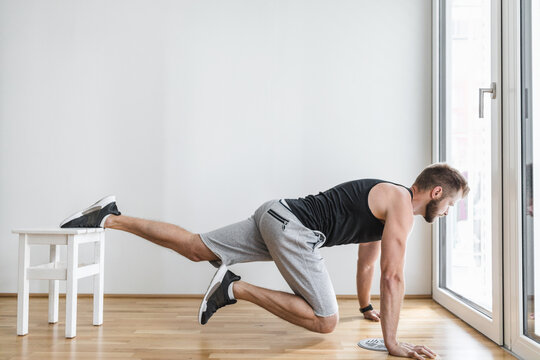
7. Mountain Climbers – Burn Fat and Strengthen Your Core
This full-body move combines cardio and strength training, helping you burn fat while toning your abs and arms.
How to do it:
- Start in a plank position.
- Bring one knee toward your chest, then quickly switch legs as if you’re running in place.
- Keep your core tight and back straight.
Time: 3 rounds of 30 seconds each.
Tip: Move quickly for cardio benefits, or go slow to focus on core control.
8. Glute Bridges – Strengthen Your Back and Glutes
A strong back and glutes are essential for good posture and body balance. Glute bridges target these areas effectively without any equipment.
How to do it:
- Lie on your back with knees bent and feet flat on the floor.
- Keep your arms at your sides.
- Lift your hips upward until your body forms a straight line from shoulders to knees.
- Squeeze your glutes at the top, then slowly lower down.
Reps: 3 sets of 15.
Tip: Avoid arching your back — the power should come from your hips.
9. Burpees – The Ultimate Full-Body Exercise
If you want a challenge that targets almost every muscle group, burpees are your best friend. They combine cardio, strength, and endurance in one powerful move.
How to do it:
- Start standing, then squat down and place your hands on the floor.
- Jump your feet back into a plank position.
- Do a quick push-up, then jump your feet back to your hands.
- Jump up high with your arms overhead.
Reps: 3 sets of 10–15.
Tip: Move at your own pace — focus on form over speed.
10. Cool Down and Stretch
After finishing your workout, take a few minutes to cool down and stretch. This helps reduce muscle soreness and keeps your body flexible. Try stretches like:
- Hamstring stretch
- Shoulder stretch
- Cat-cow pose (for your spine)
- Deep breathing exercises
A proper cool-down signals your body to relax and recover, keeping you fresh for your next session.
Creating a Home Workout Routine
To stay consistent, plan your weekly workout routine. Here’s a simple structure:
- Day 1: Full-body strength (squats, push-ups, planks)
- Day 2: Cardio (jumping jacks, burpees, mountain climbers)
- Day 3: Rest or light stretching
- Day 4: Lower body (lunges, glute bridges, squats)
- Day 5: Upper body and core (push-ups, planks, arm circles)
- Day 6: Cardio and flexibility
- Day 7: Rest
Consistency is the key to seeing results. Even if you only have 20–30 minutes a day, it’s enough to make a real difference in your physical fitness.
Final Thoughts
Staying physically fit doesn’t always require a gym membership or fancy machines. Your body itself is the best tool you have. With these simple and effective exercises, you can build strength, improve flexibility, and boost your stamina — all at home. The most important part is to stay motivated and make exercise a regular part of your daily life.
Remember, small steps lead to big changes. So, put on some comfortable clothes, clear a little space, and start moving today. Your body will thank you!
FAQs About Best Exercises for Physical Fitness at Home
1. Can I get fit without going to the gym?
Absolutely! Home workouts using bodyweight exercises can build strength, improve endurance, and enhance flexibility. The key is consistency and maintaining proper form.
2. How much time should I exercise each day?
Aim for at least 30 minutes of exercise a day, 5 days a week. Even short workouts can be effective if done regularly.
3. Do I need equipment for home workouts?
Not necessarily. Most exercises like push-ups, squats, planks, and lunges require no equipment. You can add resistance bands or dumbbells later for extra challenge.
4. How long does it take to see results?
With a balanced diet and consistent workouts, you can start noticing visible results in 4–6 weeks. However, energy levels and strength often improve sooner.5. What’s the best time to exercise at home?
The best time is when you feel most energetic — for some, it’s morning; for others, it’s evening. The key is to pick a time you can stick to daily.
No Comments